Much of the production of fruits, vegetables and vegetables suffers from the lack of specific agricultural pesticides, which makes rural producers of these activities use products destined for other crops to fight pests and diseases, experts said. which Eduardo Trevisan of the Institute of Management and Forest and Agricultural Certification (Imaflora) and Marcelo Morandi, chief of the Embrapa Environment, panel of the Ethos Conference, held in São Paulo (SP) Wednesday.
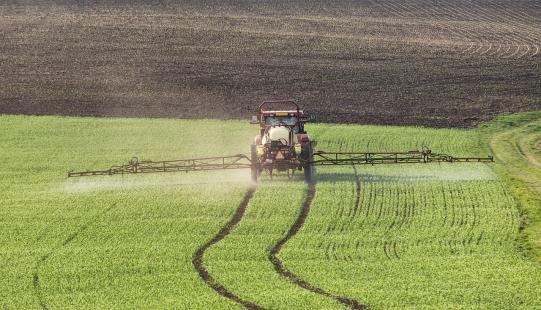
According to Trevisan, this scenario is one of the factors that leads to cases of non-compliance of pesticide residues in agricultural products, as well as inadequate management in the application of crops. “There is a lack of technical assistance and also greater access by the farmer, especially the small and medium, to other solutions, such as biological control, biodefensive agents, among others.”
According to Trevisan, the expansion of biosolutions runs counter to the lack of specific legislation for the registration of these products, which are subject to the regulatory umbrella of the laws of conventional pesticides and fertilizers, for example. “In this case, the producer is held hostage by general legislation.” The specialist pointed out that the rural producer does not use agrochemicals because he wants them, but because they are necessary. “These products are cost to the farmer.”
In the evaluation of Morandi, Embrapa, the challenge for the more rational use of pesticides in agriculture goes through training, focusing on the application and correct management of the products. According to him, there are problems related to the delivery of technical assistance, rural extension, mainly for small producers.
Trevisan stressed that the digital agriculture startups and the respective solutions being developed are an interesting way to improve training in the field.
In addition, Morandi stressed that Brazilian agriculture is so large, rich and diverse, that it allows and demands the coexistence between different production models, among which, with the use of agrochemicals, organic, agroecological, etc., as corroborated by Fábio Ramos, of the Brazilian Council for Organic and Sustainable Production (Organis), another member of the panel.
This text was translated by machine from Brazilian Portuguese.