The animal feed sector is expected to register a slight decline of 0.2% in annual feed production in 2018, according to forecasts by the National Union of Animal Feed Industry (Sindirações). In 2017, 68.7 million tons of feed and 2.98 million tons of mineral salt were manufactured.
According to Ariovaldo Zani, executive vice-president of Sindirações, the increase in the cost of food pushed by rising grain prices and other imported and dollar-indexed inputs and the truckers’ strike in May were the main factors that impacted in the sector numbers.
“These factors led to a modulation of the performance of the production chain that resulted in the accounting for 32.6 million tons in the first semester, a mark that represents a regression of 1.4% in relation to the amount produced from January to June last year. Applying a reasonable amount of optimism, the forecast is to ensure stability and produce something around 71.8 million tons of rations and mineral salt until December, “says Zani.
According to Sindirações forecasts, poultry, responsible for more than half of the demand, should close the year with 38.2 million tons produced, down 0.9%. Among poultry sub-categories, broiler chicken feed should represent 31.7 million tonnes, down 2%, while laying hens tend to end 2018 at 6.5 million tonnes, up 5% on production.
Cutting Poultry– In the first six months of the year, the broiler producer demanded 15.9 million tons of feed, a decrease of 3.3%, in response to chicks’ housing, which declined by approximately 4.2%, mainly due to the high cost of corn and soybean meal. Subsequently, the disruptions resulting from the logistical blockade at the end of May, hindered the delivery of feed and caused great mortality of birds. The European embargo on exports and the difficulty of the domestic consumer in acquiring the surplus continue to compromise the productive chain. The forecast is that the production of ration for broilers in 2018 will account for 31.7 million tons, a decrease of 2% in relation to the one produced last year
Posture Poultry– The production of feed for laying hens in the first semester, in turn, totaled 3.0 million tons and a 5% increase, in response to the robust accommodation of laying chicks and egg production that in the second quarter broke historic record. Faced with the continuity of this rhythm, the demand for rations for posture can add up to 6.5 million tons in 2018
Swine industry– Already demand for pork rations remained stable in the first half of the year and amounted to 7.7 million tonnes, despite the decline in exports due to the Russian embargo and the low price paid to live pigs that greatly corrode the producers’ profitability. The outlook is that during the year 2018 16.7 million tons of feed will be produced, an increase of 1% in relation to the one recorded in 2017
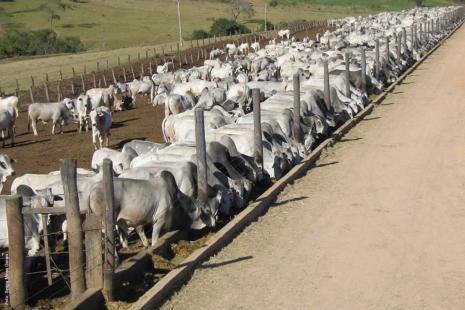
Bovinocultura of cut– During the first half of the year, the production of animal feedstuffs for beef cattle reached 1.1 million tons, a 1% increase compared to the same period of last year, mainly due to the resilience of the production chain, also afflicted by the truck drivers at the end of May, although the price of the beef and calf is still well below that of mid 2016. Relying on the recovery of the second feedlot, the forecast reaches production of 2.6 million tons of cattle feed cut in 2018.
Dairy Cattle– The dairy cattle chain, in turn, suffered greatly due to the logistical blockade in May, which compromised the delivery of the inputs to feed the herds and paralyzed the capture of the milk produced. Estimated feed production accounted for only 2.39 million tonnes from January to June, a decline of 6.5% from the same half last year. On the other hand, the scarce supply of raw milk to dairies favored the increase of its price. This apparent improvement may give vigor, especially to more advanced producers, and minimize the decline in dairy cattle feed production during the second half. The forecast in 2018 is to produce 5.8 million tonnes or 3% less than in 2017.
Aquaculture– Production of fish and shrimp feeds during the first half of the year amounted to just over 646 thousand tons and fell 1.5%, due to the health challenge faced by shrimp farming, whose activity continues to decline, the emptying of the main northeastern reservoirs, and mainly due to the road blockade that seriously damaged the southern region, the main fish producing pole. If production in the Southeast, North and Central West regions continues with reasonable vigor, it is possible for aquaculture feed production to reach more than 1.2 million tons and an increase of more than 4% over the one reached in 2017.
This text was translated by machine from Brazilian Portuguese.