The expansion of information technology in the field, driven by the increasingly frequent adoption of digital solutions in agriculture, has finally attracted the attention of the telecommunications industry [operators, manufacturers, service providers, etc.] to the [good] opportunities in the agricultural universe. That is what the report of the DATAGRO Portal said in the latest issue of Futurecom, the country’s main telecom segment, held last week in São Paulo (SP).
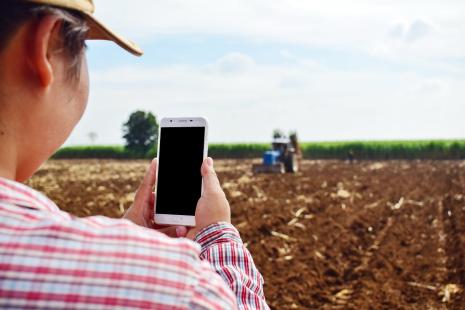
The reality is that the challenge of connectivity in the rural area is still accentuated, mainly due to the lack of basic infrastructure for voice and data communication in most of the interior of the country. In general, telecom operators face a economic viability problem in the field – low population density in comparison to the urban environment, that is, less people to pay the bill – that justifies the investment in infrastructure, read, installation of towers and transmission devices, for example.
However, this situation begins to change, anchored in business models of a corporate nature, in which the demand – for voice and data services – of a large customer enables the deployment of telecommunications infrastructure by the operators, which in this way can justify the investment and measure more accurately the possibility of return.
Corporate customer
This is the case of a recent TIM initiative, in partnership with other players in the telecom industry, including Nokia, BRFibra, BRDigital, which activated 4G coverage at Panorama Farm, owned by SLC Agrícola, in the municipality of Correntina, .
According to Alexandre Dal Forno, director of TIM Brasil, the project uses Nokia’s cellular technology to offer voice and data coverage in an area of 22,000 hectares, with Internet connection of Things (Iot) of 23 agricultural machines and ten collectors of data. According to the executive, this is the second experience of the company in this format, model that had its debut in the property of the group Jalles Machado in the city of Goianésia (GO).
Alexandre Zibordi, director of Ericsson, says that it is the progress of Iot in the day-to-day agricultural activity, which has been acting as an inducer for investments in telecommunications infrastructure in the field, whether through the installation of public networks – as in the case of operators – or private, such as the advancement of LoRa technology in farms. The Swedish multinational is considering bringing digital agricultural platforms to Brazil – already adopted in other countries, such as Japan and Australia – dedicated to the monitoring and control of irrigation and better use of agrochemicals.
In the evaluation of Ricardo Bueno, Nokia, the greater use and / or release of frequencies that provide a greater radius of signal transmission, as well as that traffic to large volumes of data are other factors, these technicians, who come extending connectivity in the field.
However, according to Fernando Martins, of the Board of Directors of Agribusiness, Education, Banking, Insurance and Technological Innovation, improving connectivity in rural areas is only the first step. According to him, the effective expansion of Iot in the field involves the establishment of a Brazilian standard of interconnectivity, which allows data to travel freely among all devices, be they sensors, agricultural machines and implements, smartphones, tablets, among others.
This text was translated by machine from Brazilian Portuguese.