The president of the Confederation of Agriculture and Livestock of Brazil (CNA), João Martins, delivered this Wednesday (09) to Minister Raul Jungmann (Public Safety) and the president of the Chamber of Deputies, Rodrigo Maia (DEM-RJ). “Study on Crime in the Field”, a document that points out the serious situation of insecurity in rural areas and presents proposals for combating and effectively combating violence that affects producers, family members and rural workers.
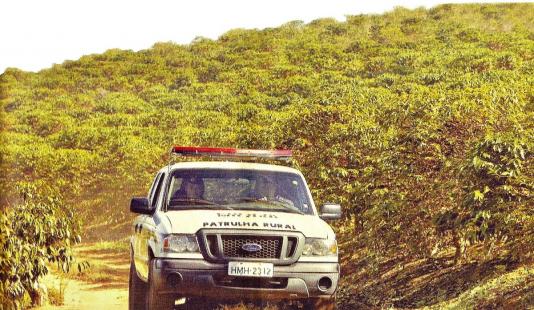
With this study, prepared by the CNA Institute (ICNA), the entity seeks the support of the Public Power to reduce the occurrence of crimes in the field, which have been increasingly common. “The field, which in the past families could go to the property, where people were sure that there would be no theft of machines, animals, fertilizers, no longer exists. What we are seeing today is a veritable massacre, “said Martins.
One of the measures advocated by the CNA president is more ostensible work of the police in the field. “It’s having constant police surveillance, which is totally unstructured. If in the capitals there is still some structure, in the field the structuring is the smallest possible. ” And the attack is already starting to give the first results. After receiving the document, Minister Raul Jungmann announced the creation of a joint commission between Ministry and Confederation to elaborate a program directed to the crime in the rural environment.
“Our role will be to jointly develop a program to combat violence in the field and, starting this week, we will begin work to form a work schedule,” said the minister, who said that the CNA document will serve as a parameter for the committee discussions. “It is a basis that, coupled with other information we have, will form a preliminary diagnosis to institute a program to combat violence in the field,” added Jungmann.
The mayor emphasized that combating violence in the countryside should be part of the public safety agenda in the Legislative and praised the proposals delivered by the CNA. “A sector when it organizes itself and does a more in depth work on its problem helps a lot the work of those who are in the public power. So this work is very important to give us a clearer radiograph of the situation in the field, “he said. The document was also delivered to the President of the Parliamentary Front of Agriculture, Deputy Tereza Cristina (DEM-MS), MPs Nilson Leitão (PSDB-MT) and Marcos Montes (PSD-MG) and Senator Ana Amélia (PP-RS).
The demands of the productive sector include, among other points, the standardization and detailed publicity of information about the occurrence of crimes in the field, specific actions and programs for the rural area, crime prevention and control projects, and the creation of specialized units prevention and control of infringements. In the document, the CNA also calls for government targets to reduce violence in the countryside and a set of laws to the Legislature to help address this crime reduction challenge.
The entity also suggests the creation of a specific National Ombudsman’s Office for the field to clarify doubts and make criticisms and suggestions to the actions of the organs involved with public security in the federal, state and municipal spheres.
Numbers
The CNA Institute (ICNA) carried out samples in 17 states based on complaints made to the Observatory of the entity. The first results show that thefts accounted for 49% of crimes, followed by robberies (33%), predation (12%), murders (35) and burnings (3%). Of the infractions practiced, 54% occurred in beef and dairy farms. Next comes grains (13%), fruits (3%) and vegetables and vegetables (1%). Another relevant side found that 74% of the crimes were in properties of up to 500 hectares.