Esalq / USP’s Center for Advanced Studies in Applied Economics (CEPEA), in partnership with CNA (Confederation of Agriculture and Livestock), has been re-estimated to 1.7% growth in GDP-volume of Brazilian agribusiness in 2018. Livestock of Brazil).
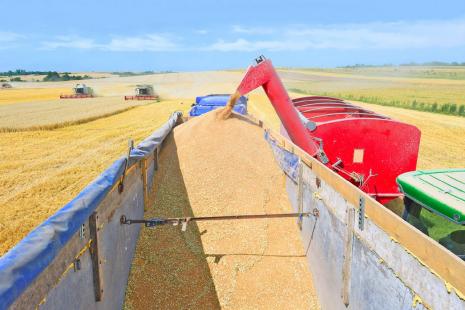
According to the Cepea researchers, among the segments (inputs, primary, industry and agro-services), the highlight remains with the industrial and service links, although growth within the port is also estimated.
Current estimates of the relative prices of agribusiness, meanwhile, point to a loss of 4.8% – this context indicates that the products of the sector are devaluing against the average of the Brazilian economy. In the balance of the determinants of income, the reduction in relative prices overcame the estimated increase in volume, so that, for agribusiness income-GDP, it is estimated a decrease of 3.2%.
Macroeconomic context
The total GDP, calculated by IBGE (Brazilian Institute of Geography and Statistics), grew 1.1% in the first half of 2018 in relation to the same period of last year – a result that was lower than expected by the market. According to the latest Focus report of the Central Bank, the estimate of growth for GDP, according to the average of the analysis of market agents, is 1.4% to 2018, well below the 3.14% expected in the first Focus report of the Central Bank , released in early January.
According to researchers Cepea, this low economic growth is accompanied by the maintenance of the high public deficit, the high unemployment rate and the downward trend in the purchasing power of the Brazilian population, as well as the market instability associated with speculation about the elections . This scenario is of concern for all Brazilian productive sectors, with emphasis on agribusiness, which has also suffered from cost pressure, notably with regard to the impacts of the freight tariff policy imposed by the federal government in response to the truck drivers’ strike in May.
This text was translated by machine from Brazilian Portuguese.