The International Energy Agency (IEA) is an institution linked to the Organization for Economic Cooperation and Development (OECD), and brings together countries that represent 70% of the total energy consumption in the world. Just over a year ago, Brazil joined the IEA as a member, along with China, India and Indonesia.
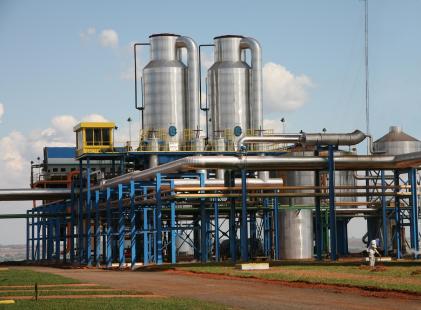
The report“Market Report Series: Renewables 2018”recently published by the IEA, states that Brazil presents the world’s least-polluting energy matrix and with more room for participation of renewable fuels among the world’s largest energy consumers. The study also points out that Brazil should reach 45% of renewable sources in the energy matrix in 2023. Currently the percentage is at 43%, according to the Ministry of Mines and Energy.
“Brazil is the rising star in sustainable energy use. The huge share of renewable energy in the Brazilian energy matrix is a source of inspiration for many countries around the world “– ITA Executive Director Fatih Birol said on November 19 during the launch of the IEA Renewable Energies Market Report at an event held at the Itamaraty Palace hosted by Ambassador José Antonio Marcondes de Carvalho , Undersecretary of Energy, Environment and Science and Technology, Ministry of Foreign Affairs.
The outlook is promising for the biofuels segment. The United States recently authorized the increase of the blend of alcohol to gasoline from 10% to 15%. India started to give more prominence to biofuels and, from 2020, China will add 10% ethanol to gasoline across the country. Finally, Canada has shown interest in implementing a policy similar to biofuels. RenovaBio, approved in Brazil, with the objective of expanding the production and consumption of biofuels, based on predictability and environmental and socioeconomic sustainability.
In Brazil, during the first ten months of 2018, ethanol produced mainly from sugarcane replaced 43.6% of gasoline consumption, and biodiesel will soon be replacing 15% of fossil diesel, generating employment and leveraging progress and income in the regions where they have settled. But the production of ethanol from sugarcane and corn, and from soybean oil biodiesel has grown, and can grow much more. After all, it makes more sense to produce and export higher value-added products such as biofuels and proteins.
Brazil is the world’s leading reference in biofuels and has been recognized by the International Energy Agency and the International Renewable Energy Agency for the potential it has to continue to expand this role, with sustainability, efficiency and low environmental impact. According to these agencies, by 2030 the proportion of bioenergy in world energy demand needs to double, and the proportion of sustainable biofuels needs to triple, in order to achieve the objective of limiting global warming to 2 degrees Celsius by 2050.
This text was translated by machine from Brazilian Portuguese.