The second quarter of 2018 was marked by a lack of rain, which led to a reduction in the production expectations of crops important to the economy of the State of São Paulo, according to the Institute of Agricultural Economics (IEA), an agency linked to the Secretariat of Agriculture and Supply .
The area occupied by grains increased by 4.55% in relation to the previous harvest, and production increased by 1.9%; the productivity, however, was lower by 2.53%.
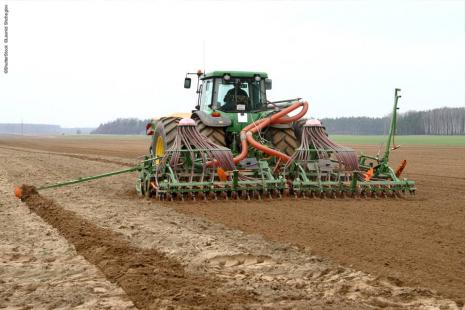
The results for soybean show an area growth of 5.7% and 6% in production. For the second corn harvest, there was a 9.5% increase in the area under production compared to the previous year. This result shows that the producers were encouraged by the crop, but the significant decrease of production (-20.2%) due to lower productivity at 27.1%, compromised the good expectations for production.
The next survey, started in September, will bring the final numbers of the crop in this crop year. At the end of the fourth coffee harvest survey, a new increase was recorded in the estimated quantity to be harvested in 2017/18, totaling 5.8 million bags (348.8 thousand tons), representing an increase of 29.1% when compared to the 2016/17 season.
The pluviometric index below the historical average also compromised the production of sugarcane, the main product of the State of São Paulo, even with the small increase in area.
The preliminary estimate of the 2017/18 crop for the orange crop indicates a production of 348.6 million boxes of 40.8 kg (14.221 thousand tons), a volume 7.4% higher than that obtained in the previous harvest. As for the total planted area of 460 thousand ha (which includes area with plants not yet productive), the survey predicts an increase of 3.1% in relation to the previous year. Although new techniques have been applied to minimize and / or resolve the incidence of plant pathophysiological problems, especially citrus canker and HLB (greening), there is still a continuing process of eradication and smaller expansion of orchards, says the IEA.
This text was translated by machine from Brazilian Portuguese.