Scientists from Embrapa Solos, in partnership with the School of Agriculture “Luiz de Queiroz (Esalq / USP) have developed a technology that promises generate great savings in the application of urea by farmers. The researchers have developed a nitrogen fertilizer with additives incorporated into the granules, a technique that reduces nitrogen losses caused by leaching and by volatilization.
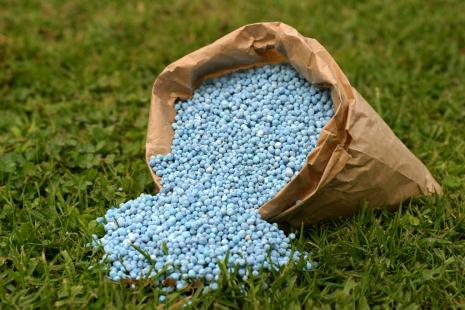
In this new technology, urease inhibitors, which prevent the transformation of the nitrogen present in the fertilizer into gaseous ammonia or nitrate, instead of being applied around the product granule, are now incorporated into the granule. The products were developed in the Fertilizer Technology laboratory of Embrapa Solos and the tests of nitrogen volatilization and agronomic efficiency were carried out at the Department of Soil Science / USP.
Losses of more than 40% of the fertilizer
“More than 40% of the nitrogen fertilizer is lost to the atmosphere when applied in the field. In addition, nitrogen fertilizer is an expensive and, in large part, imported input, “says Embrapa Solos general manager José Carlos Polidoro. “Urease inhibitors have been known for a long time. With its incorporation into the granules we can increase its efficiency. Therefore, the competitive advantage of the product for the industry is great, since it uses a known inhibitor, in a smaller dose, “he details.
Urease inhibitors provide lower losses and, consequently, products with these inhibitors show greater agronomic efficiency compared to pearly urea and commercial fertilizers coated with these same additives.
Additives incorporated into urea retard or prolong the time of continuous nitrogen availability in the soil, minimizing losses. “In this way, the use of urea-based nitrogen sources with greater efficiency and better cost-benefit relationship will have a strategic role for the fertilization of crops,” says researcher Paulo César Teixeira, Embrapa Solos.
Urea is the most widely used fertilizer in the world’s agriculture as a source of nitrogen, and is characterized as a granulated or pelleted solid fertilizer with a concentration of about 45% nitrogen.